
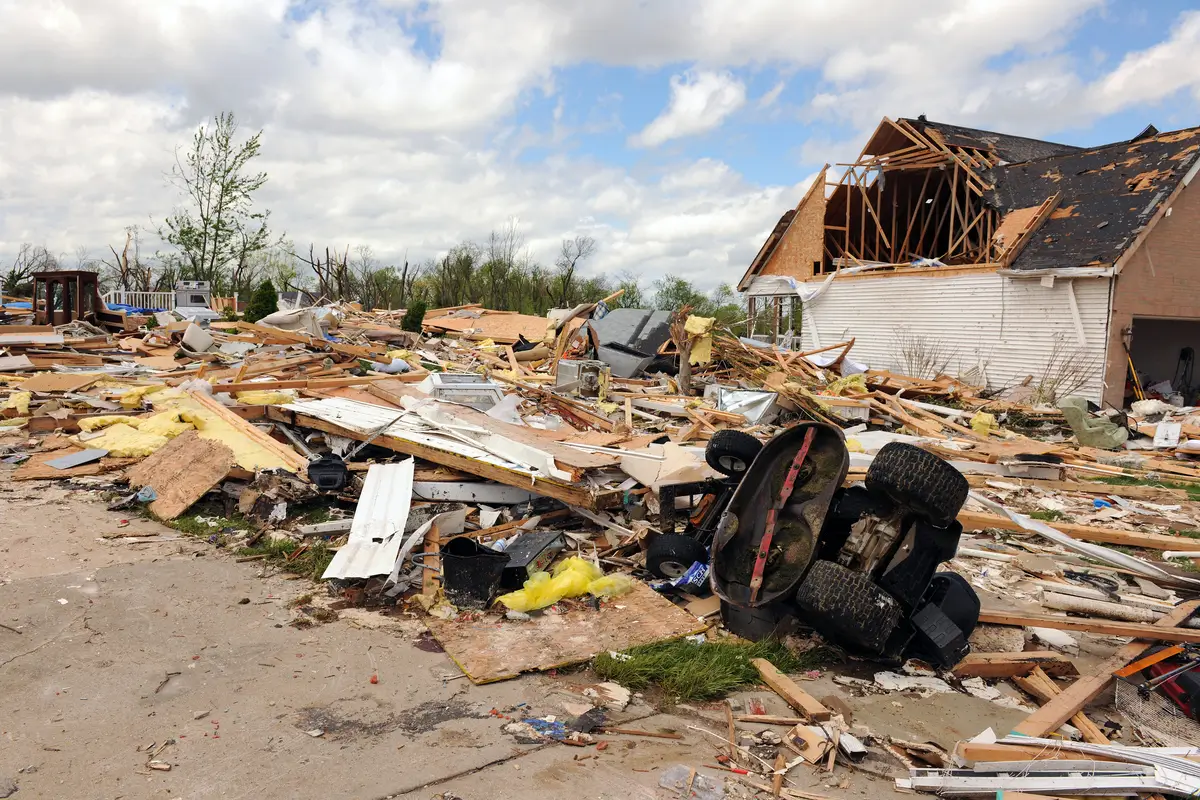
Kansas City sits squarely in one of the more active severe weather corridors in the country, and every landlord in this market eventually has to think through what happens if a tornado seriously damages or destroys one of their rental properties. Beyond the obvious physical and financial toll of storm damage, there is a specific Missouri law that directly affects your rent income in these situations, and it is one every owner in this market should understand before a storm ever hits, not after.
Key Takeaways
Missouri Revised Statutes Section 441.645 releases tenants from rent obligations if their rental home is destroyed by an act of God, including a tornado.
This protection applies specifically to destruction, not routine or partially repairable storm damage.
Tenants are still responsible for their own personal property and are expected to notify landlords in writing when invoking this law.
The right insurance coverage, specifically loss of rental income protection, is the most effective way to offset the financial impact of this law.
What Missouri Law Actually Says
Under Section 441.645 of the Missouri Revised Statutes, if a residence is destroyed by an act of God, including but not limited to fire or a tornado, or another natural or man-made disaster, the tenant is not liable to the landlord for rent for the remainder of the lease term, provided the tenant did not cause the disaster themselves. This is a straightforward statute, but its financial implications for landlords are significant. If a covered event destroys your rental property, your rent income from that unit stops immediately, regardless of how much time remained on the lease.
This law exists for good reason. A tenant should not be legally obligated to keep paying rent on a home that no longer exists or is not safe to occupy, and the law protects them from that outcome. But from an ownership perspective, it means your revenue exposure during a major storm event goes beyond just the cost of repairs.
Destruction Versus Damage: Where the Line Falls
This law applies specifically to destruction, not every instance of storm damage. A property with a damaged roof, broken windows, or downed fencing that remains safely habitable does not automatically trigger this release from rent obligations. The distinction matters, and it is not always obvious in the immediate aftermath of a storm.
Recent tornado events in the Kansas City area have shown how this plays out in practice. Following an EF1 tornado that struck Belton earlier this year, tenants displaced by the storm were advised of exactly this law, and some landlords worked directly with affected renters to prorate rent from the day of the storm or offer an early lease termination option, even in cases where the property was not a complete loss. That kind of proactive approach, rather than waiting for a legal dispute to develop, tends to preserve the landlord-tenant relationship and avoid drawn-out disputes over whether a property qualifies as destroyed under the statute.
What Tenants Are Expected to Do
If a tenant wants to invoke this law, they are generally expected to notify their landlord in writing that they are vacating the lease under this statute, and they can also request the return of any security deposit at that time. Tenants remain responsible for their own personal property, including furniture, electronics, and clothing, since this law addresses rent obligations tied to the structure itself, not personal belongings.
Understanding this process matters for landlords because it shapes how quickly and clearly you should communicate with an affected tenant. Getting ahead of the conversation, rather than leaving a displaced tenant to figure out their rights on their own, tends to produce a smoother outcome for both sides and reduces the odds of a dispute escalating.
Security Deposits After a Destructive Event
If a lease terminates under this statute, the standard security deposit return timeline and requirements under Missouri law still apply. You cannot withhold a deposit simply because the lease ended early due to a disaster rather than a normal move-out. Deductions should still be limited to legitimate damage beyond normal wear and tear, and documentation of the property's condition before the storm, ideally from your regular inspection records, becomes valuable if any dispute arises over what damage existed beforehand versus what the storm caused.
Protecting Your Investment Before the Next Storm
Since this law transfers financial risk to the property owner in the event of destruction, the most effective protection is making sure your insurance coverage accounts for it directly. Loss of rental income coverage, sometimes called loss of rents or fair rental value coverage, reimburses you for rent you cannot collect when a covered event makes your property uninhabitable. Given how directly this pairs with Missouri's act of God statute, confirming this coverage exists on every property you own in this market is one of the most important insurance reviews a Kansas City landlord can do.
Beyond insurance, a few practical steps make a meaningful difference when severe weather hits:
Keep current photo documentation of every property's condition, ideally refreshed at each seasonal inspection, so post-storm damage assessments have a clear before-and-after comparison.
Maintain updated contact information for every tenant, so you can communicate quickly if a storm affects one of your properties.
Review your wind and hail deductible structure, since these are often calculated as a percentage of dwelling coverage rather than a flat amount, which can mean a larger out-of-pocket cost than owners expect.
Our property inspection process is built to catch and document exactly this kind of baseline condition information, which becomes valuable protection if you ever need to demonstrate what damage existed before a storm versus what the event itself caused.
FAQ
Does this law apply if my rental has minor storm damage but is still livable?
Generally no. The statute specifically addresses destruction of the residence. Repairable damage that leaves the home safely habitable typically does not trigger release from rent obligations, though the specific facts of each situation matter.
Can I still charge a tenant for damage they caused, separate from storm damage?
Yes. This law addresses liability tied to an act of God, not damage caused by tenant negligence or misuse, which remains handled under your standard lease terms and security deposit process.
Do I need to return the full security deposit if the lease ends under this statute?
You still follow Missouri's standard security deposit rules, returning the deposit minus any legitimate deductions for damage beyond normal wear and tear that existed independent of the storm event itself.
Is renters insurance required for tenants in Missouri?
No, Missouri does not require it by state law, though many landlords choose to require it in their lease. It can help tenants cover personal property loss and temporary housing costs that this statute does not address.
Being Prepared Protects Everyone
Severe weather is simply part of owning rental property in this region, and Missouri's act of God law is one of the clearer examples of how state law shapes your financial exposure when the worst happens. Landlords who understand this law, carry the right insurance, and communicate clearly with tenants when a storm hits tend to come through these situations in far better shape than those caught off guard. If you want a team that already has these protections built into how your properties are managed, reach out to our office and let's talk about your specific properties.