
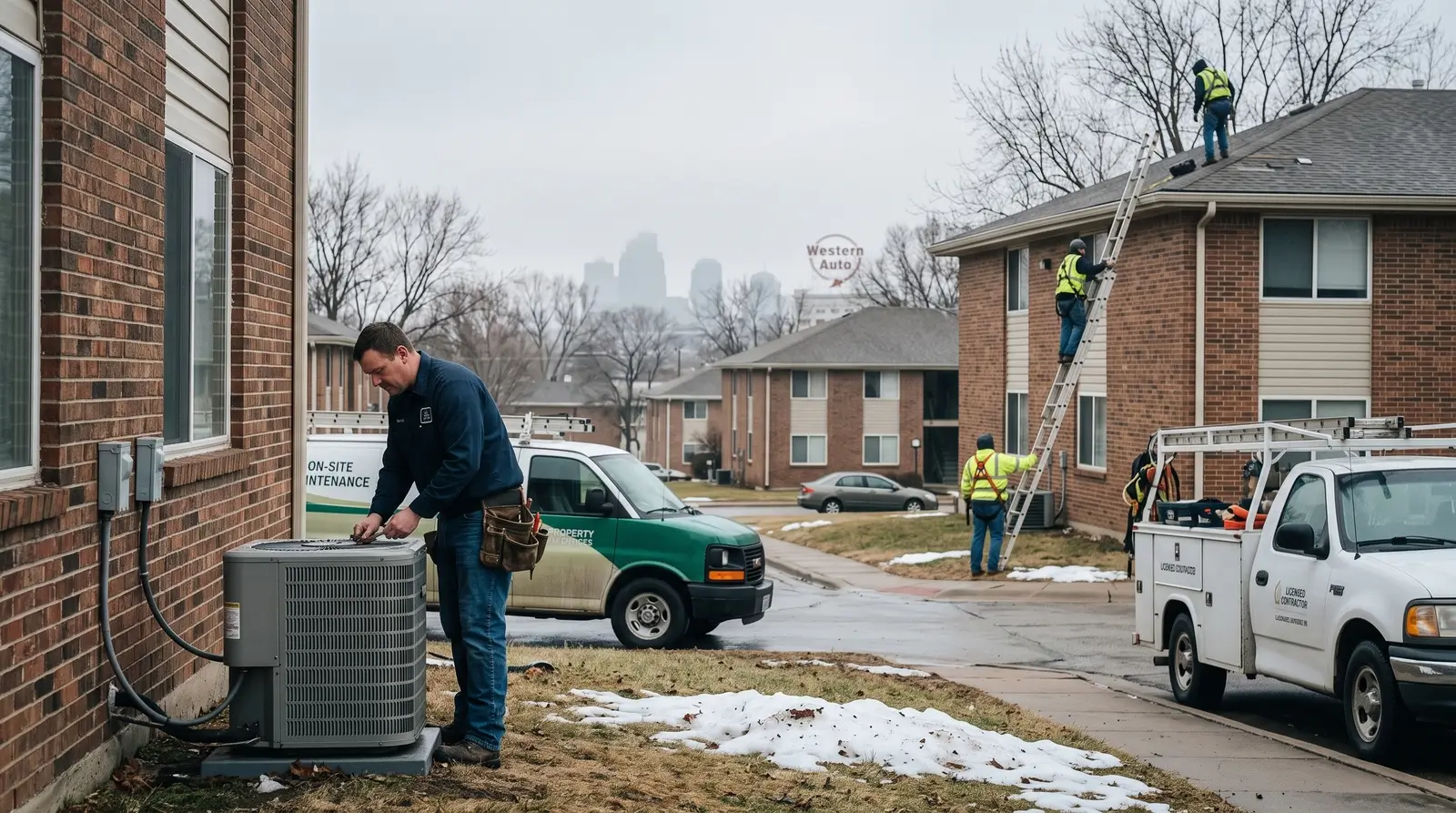
It's 9 p.m. on a January night, the temperature just dropped below zero, and your Kansas City tenant is calling. The furnace stopped working. Who picks up the phone, and how fast can someone get there?
For Kansas City landlords, maintenance is where you win or lose profits. A quick, fair repair keeps tenants happy and your property in good shape. A slow, overpriced one eats into your cash flow and can push a good tenant to move out.
One of the biggest factors behind that outcome is who does the work. Some property managers rely on an in-house maintenance team. Others hire outside vendors for nearly every job. Both models have strengths and weaknesses. Here's how they compare, so you can decide what works best for your rental.
Key Takeaways
- In-house maintenance usually means faster response times and lower costs on routine repairs.
- Outside vendors are the better choice for specialized, licensed, or large-scale work.
- Kansas City's freezing winters, humid summers, and severe storms make quick, preventive maintenance especially valuable.
- A hybrid model that pairs an in-house team with trusted specialists often gives landlords the best balance of speed, cost, and quality.
What Each Model Means
In-house maintenance means the property management company employs its own technicians. When a repair request comes in, the company sends one of its own people to handle it.
Outside vendors are independent contractors, such as plumbers, electricians, HVAC companies, and handymen. The property manager calls them for each job, and the vendor bills for their time, materials, and sometimes a trip charge.
Most companies use some mix of both. The real question is which one handles the bulk of your everyday repairs.
The Case for In-House Maintenance
Faster Response Times
When the technician works for the management company, scheduling is simpler. There's no waiting for a busy contractor to return a call or fit your job into their week. Common issues like leaky faucets, broken garbage disposals, and running toilets can often be fixed the same day or the next. Quick fixes like these are one of the easiest ways to keep tenants renewing.
Lower Costs on Routine Work
Outside contractors have their own overhead and profit margins built into every invoice. Some property managers also add a markup on top of vendor bills. With in-house staff, those extra layers are often reduced or removed for everyday repairs. Over a year of small fixes, that difference adds up.
More Accountability
If an in-house technician does a poor job, the management company owns the problem. There's no finger-pointing between the manager and a third party. That direct responsibility often leads to better quality and quicker fixes when something isn't right.
Better Knowledge of Your Property
In-house techs often visit the same homes again and again. They learn the quirks of your property, like an older water heater or a sump pump that needs watching. That familiarity helps them spot small problems before they turn into expensive ones.
Easier Preventive Maintenance
Preventive work is easier to schedule when a company has its own team. Regular tasks like filter changes and regular rental inspections can be done on a set schedule instead of waiting for something to break. ENERGY STAR recommends checking HVAC filters monthly, changing them at least every three months, and scheduling a yearly tune-up.
The Downsides of In-House Maintenance
In-house teams aren't perfect. Some jobs require licensed specialists, especially major electrical, plumbing, or HVAC work. A general maintenance tech isn't the right person to replace a main sewer line or install a new furnace.
Capacity can also be a challenge. During a major ice storm or a summer heat wave, dozens of calls may come in at once. A small team can get stretched thin, so it's worth asking how a company handles those peak periods.
The Case for Outside Vendors
Specialized Skills and Licensing
For complex repairs, a licensed specialist is often the best choice. Foundation work, roof replacements, and major system installs need the right expertise and licensing. Kansas City and nearby cities also have permitting and licensing rules for certain trades.
Easy to Scale
Outside vendors give property managers flexibility. When a big storm hits or several homes need work at once, a manager with a deep vendor list can spread the jobs across several companies.
Competitive Bids for Big Projects
For larger projects, like a full kitchen update or a new HVAC system, getting several bids can help you get a fair price.
The Downsides of Outside Vendors
The biggest drawback is cost. Vendors charge for travel time, minimum service fees, and their own profit margin. If your manager adds a markup to each invoice, a simple repair can cost far more than expected.
Scheduling is another issue. Popular contractors are often booked days or weeks out. While you wait, your tenant waits too, and that frustration can affect renewals.
Quality can also vary. Different vendors have different standards, and the property manager may not be on-site to check the work.
A Simple Cost Comparison
Let's look at a basic example. Say your tenant reports a clogged kitchen drain.
An outside plumber might charge a trip fee, a minimum labor charge, and parts. If the manager adds a 10% markup, the total goes up again. An in-house technician may handle the same job for a lower labor rate with no trip fee and no extra markup.
One repair won't make or break your year. But a typical rental might see a dozen or more small repairs annually. When each one costs less, the savings can be significant.
Kansas City Factors That Make Maintenance Matter
Kansas City's climate and housing stock make good maintenance especially important.
- Freeze-thaw cycles. Winter cold can burst pipes and crack driveways, and quick response limits water damage.
- Hot, humid summers. Air conditioners work hard from June through September, and a broken AC is an urgent call.
- Storms and heavy rain. Severe storms can damage roofs, gutters, and siding, and basements may take on water. Knowing your storm damage responsibilities helps you act fast.
- Older homes. Many Kansas City rentals sit in established neighborhoods with older homes that need steady upkeep.
With these conditions, both speed and prevention matter. A manager who catches small problems early can save you from major repair bills later.
The Best Approach: A Smart Mix
For most Kansas City landlords, the best answer isn't one or the other. It's a hybrid model.
An in-house team handles routine repairs, preventive maintenance, and inspections quickly and at a lower cost. Licensed outside specialists step in for large or complex jobs that require specific expertise. That mix gives you speed, savings, and quality where it counts.
Questions to Ask Your Property Manager About Maintenance
Before you hire a management company, ask these questions:
- Do you have an in-house maintenance team, and what jobs do they handle?
- Do you add a markup to vendor invoices? If so, how much?
- What's your typical response time for urgent and non-urgent repairs?
- Do you require my approval for repairs above a certain dollar amount?
- How do you handle after-hours emergencies?
- Do you offer preventive maintenance, like filter changes and inspections?
- Will I receive photos and itemized invoices for completed work?
Clear answers to these questions will tell you a lot about how your property will be cared for.
Frequently Asked Questions
Do property managers mark up vendor invoices?
Some do, and the amount varies by company. Always ask about markups before signing a management agreement.
Is in-house maintenance always cheaper?
Not always. It's usually cheaper for routine repairs, but large or specialized projects may cost less through competitive bids from licensed contractors.
How often should HVAC filters be changed in a Kansas City rental?
ENERGY STAR suggests checking filters monthly and replacing them at least every three months, more often during heavy heating and cooling seasons.
Get Maintenance That Works for You
In-house maintenance and outside vendors each have a role. The real goal is fast, fair, quality repairs that protect your property and keep good tenants in place.
At Hunter Property Management, our in-house maintenance team helps Kansas City owners save money by avoiding costly subcontractor fees. Our quick response times lead to happier tenants and better retention. We also handle spring and fall filter changes and full property inspections, so we can catch small issues before they grow. When a job calls for a licensed specialist, we coordinate that too.
Contact Hunter Property Management today to learn how our Kansas City property management services can keep your rental in top shape while protecting your bottom line.