
Why Kansas City Rentals Need a Winter Game Plan
It usually starts quietly. A cold night settles over Kansas City, a pipe in an outside wall freezes, and nobody notices until the thaw, when water is already soaking the drywall, floors, and the basement.
The National Weather Service puts Kansas City’s average first fall freeze at October 28. Nearby Lee’s Summit averages October 17. If your fall prep slipped, don’t panic. The deepest cold of the heating season is still ahead, and there’s time to get ready.
This checklist walks you through the steps that protect your property, your tenants, and your rental income before winter tests them.
Kansas City Winter Prep by the Numbers
Key Takeaways
Here is the short version for busy owners.
- Freezing temperatures reach Kansas City by late October on average, so winter prep belongs on your fall calendar.
- Outdoor faucets, exposed pipes, and the main shut-off valve deserve attention before any other winter task.
- A furnace tune-up, a clean chimney, and working smoke and carbon monoxide alarms protect both tenants and your investment.
- Weather stripping, insulation, and clear gutters reduce heat loss and help prevent ice dams and water damage.
- In Kansas City, Missouri, rental heat must reach at least 65°F in habitable rooms and bathrooms.
Plumbing Is Your First Line of Defense
Most winter water damage starts with plumbing, so begin your checklist here.
Shut Down Every Outdoor Faucet
Disconnect and drain every garden hose, then cover outdoor faucets with insulated caps. A hose left attached traps water in the spigot, and that ice can crack the line inside the wall, one of the most common causes of pipe bursts. Irrigation systems should be drained or blown out by a professional before freezing temperatures settle in.
Protect Exposed Water Pipes
Walk the basement, crawl space, garage, and any exterior walls behind sinks. Pipes in unheated spaces need foam sleeves or extra insulation, and gaps that let cold air reach them should be sealed.
Label the main shut-off valve and show tenants where it is. The Kansas City Board of Public Utilities advises letting faucets drip during extreme cold, opening cabinet doors near plumbing, and keeping the thermostat steady day and night.
Put those simple steps in your winter tenant notice so everyone knows how to prevent pipes from freezing.
Give the Water Heater a Pre-Winter Check
Have the water heater checked for leaks, a working pressure relief valve, and a properly attached exhaust. Kansas City's Healthy Homes rules require a red-tagged water heater to be repaired within 72 hours.
Inspect supply hoses on washing machines and toilets too, and replace cracked or bulging lines before cold weather adds stress.
When frozen pipes do break, response time decides how much damage you pay for, which is why in-house maintenance matters so much in January.
The cheapest winter repair is the one you schedule in the fall, before the pipes ever get the chance to freeze.
Get the Heating System Winter-Ready
Your heating system carries the whole house through winter, so give it a full service before the heating season begins in earnest.
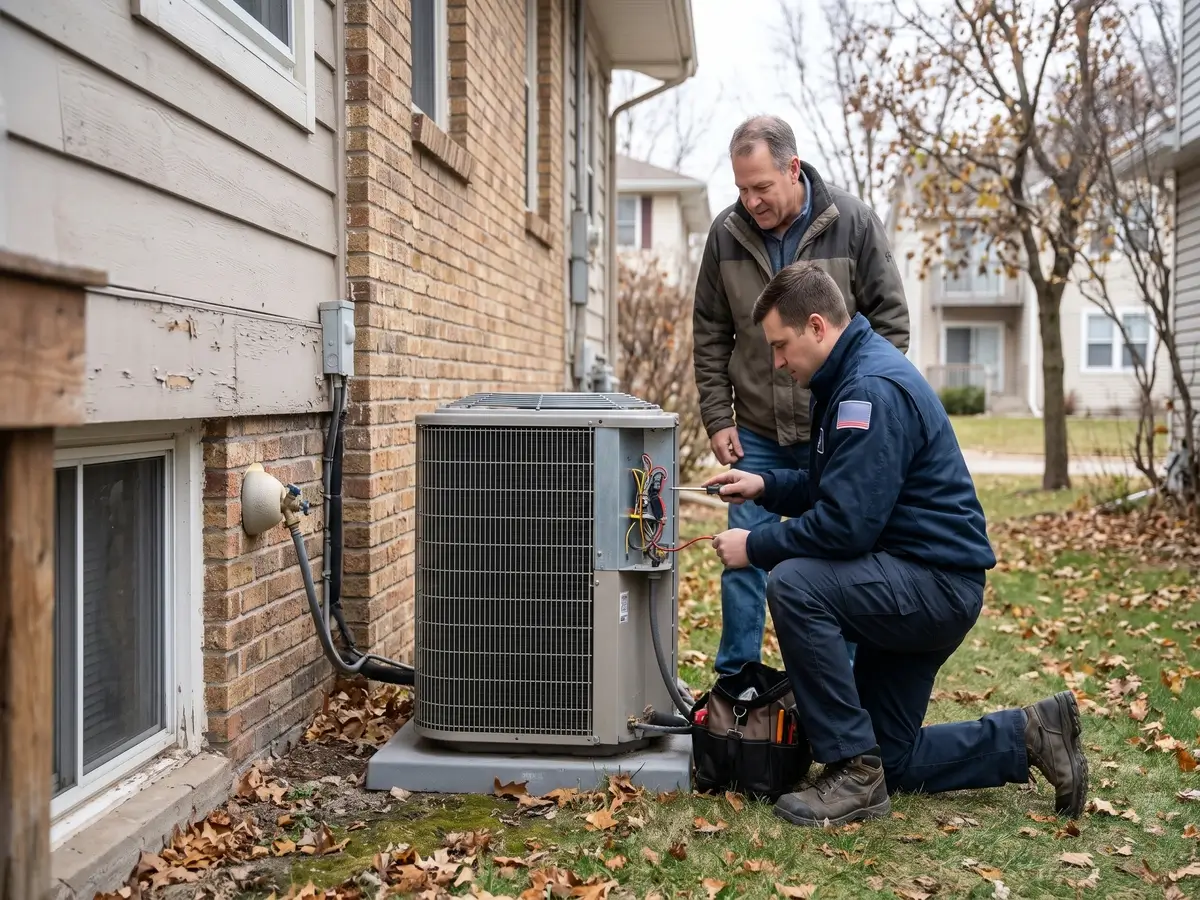
- Furnace or boiler tune-up: Schedule a licensed HVAC service early, and confirm that exhaust vents are attached and sealed.
- Fresh filters: Kansas City's rules require furnace filters that are the correct size and properly seated.
- Chimney and fireplace flue: The City of Lawrence, citing the U.S. Fire Administration, recommends having the chimney inspected and cleaned annually by a certified specialist.
- Smoke detectors and CO alarms: Test every unit and replace batteries, since Kansas City's rules require owners to keep these alarms operable.
- Space heater rules: Kerosene and certain portable fuel-burning heaters don't satisfy Kansas City's heating requirement, so address them in your lease.
At Hunter Property Management, we pair our fall filter changes with full property inspections, a habit we explain in our guide to how often to inspect a rental.
Seal the House against Heat Loss
Drafty homes cost money, stress the furnace, and leave tenants reaching for space heaters.
Fix Drafty Windows, Exterior Doors
Replace worn weather stripping and door sweeps, and re-caulk cracks around frames. Kansas City's rules treat a double-hung window as weathertight only when, among other conditions, the gap between sash and frame stays at 1/16 inch or less. Exterior doors fall under similar standards.
Insulate the Attic, Crawl Space, Basement
Check attic insulation depth, seal crawl space access doors, and look for gaps around the basement rim. Extra insulation keeps warm air inside, which eases the load on the furnace and lowers the risk of ice on the roof.
Small sealing jobs like these help owners and tenants save money on utilities all winter.
Prep the Roof, Gutters, Yard
The outside of the house needs attention before snow and wind arrive.
Clear gutters of leaves and other debris so meltwater drains away from walls and the foundation. When heat escapes through the attic, snow melts on the roof and refreezes at the edge, forming ice dams that push water under shingles.
Kansas City's rules require gutters that are attached and sealed, downspouts that direct water away from the foundation, and immediate tarping of active roof leaks.
Have trees trimmed of dead branches hanging over the roof, driveway, or walkways, since ice and wind can bring them down. If you supply snow blowers, have them serviced in the fall. Keep sand or a pet-safe ice melt on hand for steps and walks.
Extra Steps for Vacant Rentals
An empty home is the riskiest property in winter because no one is there to notice a failure. Keep the utilities on and the heat running, with the thermostat no lower than the 55°F BPU recommends.
Schedule regular walk-throughs during cold spells. For a longer vacancy, a licensed plumber can shut off the water, drain the lines, and add non-toxic plumbing antifreeze to drains and toilets. Review your insurance policy as well, since some policies treat extended vacancy differently.
What Kansas City Requires of Landlords in Winter
Winter prep also keeps you on the right side of local rules.
In Kansas City, Missouri, the Healthy Homes Rental Inspection Program requires owners to heat every habitable room and bathroom to at least 65°F. Owners also keep exterior stairways clear of snow and ice, unless a unit has its own entrance and the written lease assigns that job to the tenant.
Rental permits must be renewed every year by December 31, so winter is also permit season. Violations can bring fines of up to $1,000 on conviction, and each day a violation occurs counts separately.
These rules apply inside Kansas City, Missouri. Belton, Lee’s Summit, Independence, and Kansas-side cities such as Overland Park set their own codes, so confirm local requirements before relying on this summary.
Frequently Asked Questions
These are the winter questions we hear most from Kansas City owners.
- Aim for September through mid-October, since Kansas City's average first freeze lands on October 28 and some suburbs freeze earlier. If you're already past that window, tackle outdoor faucets, exposed pipes, and the furnace first.
- The Kansas City Board of Public Utilities recommends setting the thermostat no lower than 55°F when a home will sit empty. Keep utilities active and check the property regularly during cold spells.
- Under Kansas City, Missouri's Healthy Homes rules, owners keep exterior stairways and exits clear unless a unit has its own entrance and the written lease makes it the tenant's job. Outside city limits, local code and your lease language decide.
Beat the Freeze, Protect Your Cash Flow
Winterizing a rental property in Kansas City comes down to a handful of steps done early: protect the plumbing, service the heat, seal the drafts, clear the gutters, and watch vacant homes closely. Owners who finish this list in the fall spend winter sleeping through cold snaps instead of answering emergency calls.
At Hunter Property Management, we’ve served Kansas City-area owners for more than 34 years. Our in-house maintenance team responds quickly, and our spring and fall filter changes come with full property inspections that catch small issues before they freeze into big ones.
Ready to make your Kansas City rental winter-ready?
Hand us the frozen-pipe worries and furnace calls this season. Call 417.887.3004 or contact our team, and let’s get your rental winter-ready while it keeps earning.
Contact our team